


Broken tailbone: treatment and recovery time
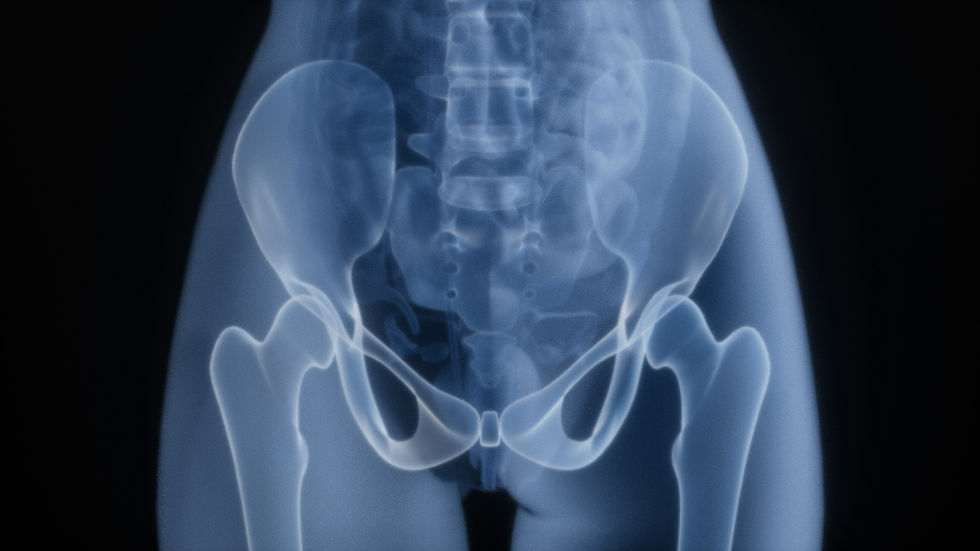
Broken coccyx (tailbone fracture): causes, symptoms and recovery
A coccyx fracture, or broken tailbone, generally occurs after a fall backwards onto a slippery surface, such as a wet floor or an icy pavement. It affects women more often, partly because childbirth is another possible cause. Although rare, a coccyx fracture shows itself through a pain called coccydynia, a persistent pain located at the coccyx, the small bone attached to the sacrum. It gets worse with weight-bearing activities and especially when you stay seated. If you think you may have suffered this kind of injury, or you have pain in your coccyx and sacrum and want to make sure you haven’t broken your tailbone, read this article.
Coccyx fracture: what is it?
You may be wondering: “What is a coccyx fracture? Should I be worried?”
Let’s start by understanding what the coccyx is. The coccyx is the last vertebra of the spine. Although it does not have the shape of a true vertebra, this part of the body develops, in evolutionary terms, together with the rest of the spine and forms its final section. It attaches to the lower end of the sacrum through a true joint, becoming an integral part of the sacrococcygeal complex. Its fundamental functions are to protect the final part of the spinal cord, to support the body’s weight when sitting (forming a kind of tripod together with the ischial tuberosities) and, finally, to act as an attachment surface for muscles, ligaments and tendons. Because of its position, its exposure and its inherent fragility, it can suffer a clear fracture after a direct blow (slipping and landing on your bottom, sporting injuries in contact sports such as being kneed, or childbirth). Treatment is generally conservative.
Coccyx fracture: causes
As mentioned, the causes of a coccyx fracture are generally traumatic. The most common cause is a fall backwards onto a hard surface, usually on a slippery floor, because it is wet, icy or dirty (a banana skin, for example). It has been estimated that coccyx fractures are far more frequent in winter because of ice than in the warmer seasons. In addition to a simple backward slip, the coccyx can also break from direct blows, very common in sports involving intense physical contact such as football, American football, rugby and so on. Another very common cause of a coccyx fracture is childbirth, which partly explains why women are more often affected. The baby, especially in difficult (dystocic) deliveries, naturally tends to take up positions that, in a susceptible person, can put so much pressure on the coccyx that it exceeds its load-bearing capacity and breaks it. Besides childbirth, a coccyx fracture in women also seems to be linked to the many cases of early osteoporosis.
As well as being female, the pre-pubertal age also seems to be a risk factor for coccyx fracture. Between the ages of 10 and 14 the skeleton is still developing and not yet fully formed, so at an age when sporting activity is so common, even minor repeated trauma is enough to fracture it. Between 10 and 14 years of age, avulsion fractures can also occur, in which small fragments of bone are pulled away by vigorous physical activity. Among men, although extremely rare, an insufficiency fracture due to osteoporosis can occur, especially in older age, when frequent falls caused by balance problems are an added factor.
Coccyx fracture: symptoms
The typical symptoms of a coccyx fracture can be summed up in one word: coccydynia. The term means pain in the coccyx, and pain located at the coccyx is indeed the most common symptom. First of all, at the moment of direct or indirect trauma, you would feel strong pain in the coccygeal area. If you had broken your coccyx, you would feel a persistent pain at the end of the sacrum, in line with the gluteal cleft. As with all fractures, a broken coccyx gets worse as the load increases, for example when playing sport or sitting on a hard surface, and improves with rest and by taking the pressure off the area, for example by lying face down on the bed.
A broken coccyx does not generally cause radiating symptoms. However, if the initial injury was a high-impact one (a fall down the stairs or a motorbike accident, for example), the symptoms may spread to other areas and the sacrum may also be fractured. The symptoms of a sacral fracture would be far more serious, involving the nerves and the pelvic organs (incontinence, pain radiating down the leg or into the perineum). Symptoms suggesting a sacral fracture require immediate medical attention.
Coccyx fracture: diagnosis
Diagnosing a coccyx fracture is not straightforward. Its rarity makes it hard to diagnose. A physiotherapist specialising in musculoskeletal disorders is the right person to identify the condition you are suffering from and to recommend the best course of treatment. The diagnosis is mainly clinical: by looking at the triggering event (a fall backwards or childbirth, for example) and the area of pain, the underlying condition becomes easy to understand. Definitive confirmation comes from an X-ray or a CT scan, which your doctor can prescribe if they consider it necessary. Once a medical diagnosis has been reached, it is important to start as early as possible with a treatment tailored to your needs.
Coccyx fracture: treatment
What is the right treatment for a broken coccyx?
Once a patient has received a correct diagnosis, treatment is conservative in 90% of cases. The physiotherapist, in agreement with the patient’s doctor, takes charge of the patient and carries out the essential process of education and management of the condition. The physiotherapist can advise which postures to adopt to reduce your pain, and how to manage your daily activities and your work. When pain and spontaneous biological repair allow it, the physiotherapist will begin to mobilise the surrounding area to relieve pain, treating any associated problems (muscle tightness in the lower back, pain on movement). When the condition allows, the physiotherapist will guide you, gradually and steadily, in returning to physical activity, preparing you specifically for your sport.
If conservative treatment fails, or natural recovery is too slow (more than six weeks) to bring a clear improvement in symptoms, treatment with non-steroidal anti-inflammatory drugs (NSAIDs) can be started in agreement with the doctor. Epidural steroid injections, or pericoccygeal injections of local anaesthetic and/or steroids, can also be used if these treatments are not enough. As a next step, pericoccygeal injections combined with manipulation (that is, repeated flexion and extension of the coccyx for 1 minute) under general anaesthetic have reported a recovery rate of 85%. This condition and its treatments carry a recurrence rate of 21%, especially when treated with medication alone. The rate is lower when physiotherapy for reconditioning and rehabilitation is prescribed alongside the medication.
For patients who do not respond to the measures above, surgery (coccygectomy) may be indicated. Coccygectomy has been successful, with success rates of 60-91%. However, it is a more invasive procedure, with a complication rate of up to 22%, usually associated with perineal contamination of the wound. Other complications can include persistent bleeding from the haemorrhoidal venous plexus of the rectum. In a very thin patient with a kyphotic sacrum, the remaining part of the sacrum can be a source of persistent pain, and in a debilitated patient the risk of pressure sores may also be higher. Newer surgical techniques include vertebroplasty and, in the case of fractures, sacroplasty. In theory, this procedure may be useful for patients who do not respond to other treatments, with a higher success rate than coccygectomy and fewer complications.
Coccyx fracture: healing times
Healing times for a coccyx fracture vary. As with all fractures, biological healing takes between six weeks and two months, but this depends on age, other health conditions, the severity of the fracture, any associated injuries, how early conservative treatment begins and the type of surgery, if any. Taking all of this into account, the most common causes of coccyx fracture, namely childbirth in women and backward falls in middle age, have a favourable outlook. With conservative treatment, the condition resolves completely and you can return to all daily and working activities in the short term (1 month). In the medium to long term (2 to 4 months) you can also make a full recovery to sporting activity. Healing time is closely linked to how early rehabilitation begins, so don’t waste time!
Conclusion
So what should you do if you have a broken coccyx?
First of all, rely on a competent professional. They will tell you the best way forward: whether to refer you to a doctor if the coccyx pain is hiding a more serious condition, or to take you on and begin conservative treatment. Have confidence in conservative treatment: 9 out of 10 people make a full recovery with no recurrence. In the rare cases where this doesn’t happen, don’t worry, because there are other equally effective treatment options. The important thing is not to waste time on useless and potentially harmful therapies, as they delay treatments based on scientific evidence.
References
Dean LM, Syed MI, Jan SA, Patel NA, Shaikh A, Morar K, Shah O. Coccygeoplasty: treatment for fractures of the coccyx. J Vasc Interv Radiol. 2006 May;17(5):909-12. doi: 10.1097/01.RVI.0000217953.74013.87. PMID: 16687760.
Won H, Moon SY, Park JH, Kim JK, Kim HS, Baek SH, Kim SY, Lee YK, Koo KH. Epidemiology and risk factors of coccyx fracture. Injury. 2020 Oct;51(10):2278-2282. doi: 10.1016/j.injury.2020.07.019. Epub 2020 Jul 8. PMID: 3266…


Comments